
| Date | Project Staff | Title of the Dissertation | Supervisors |
|---|---|---|---|
| 08/2026 | Dr. Caroline Grauer, KIT | Option Trade Classification, Demand Measurement, and Stock Return Predictability | |
| 05/2025 | Dr. Jan Harren, Universität Münster | Frictions in Financial Markets and Asset Pricing | |
| 08/2026 | Dr. Julian Böll, KIT | Asset Pricing Anomalies and Option Markets | |
| 06/2026 | Dr. Matthias Reiner, WU Vienna | Learning from Asset Prices Around Climate and Monetary Policy Announcements | |
| 04/2026 | Dr. Philipp Höfler, Goethe-Universität Frankfurt a.M. | Essays in Empirical Asset Pricing | |
| 05/2026 | Dr. Tom Ernst, Goethe-University Fankfurt a.M. | Essays on Passive Investing, Intermediation, and Asset Prices |
|
Appointments
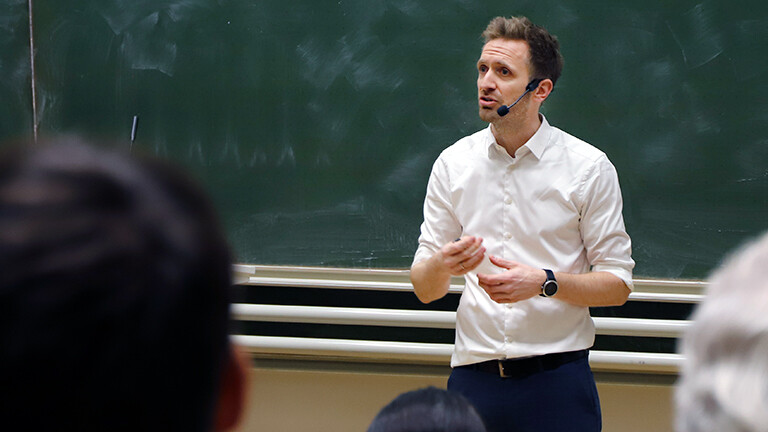
Our project manager Julian Thimme took up a permanent W3 professorship at KIT in August 2025 following a successful evaluation of his W1 tenure-track professorship. He delivered his inaugural lecture took place in November 2025 as part of the Nacht der Wissenschaft. Click here to visit the website of his department "Financial Markets" at the Institute for Finance, Banking, and Insurance.
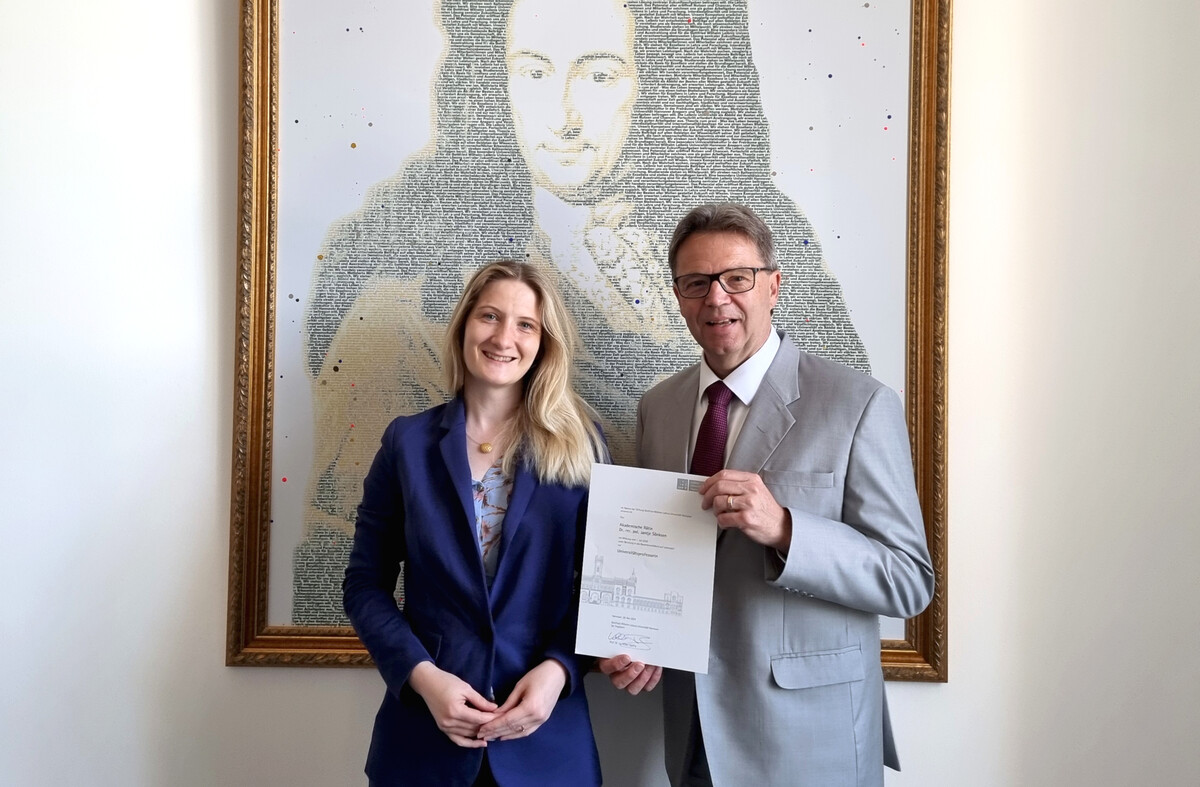
Our project manager Jantje Sönksen was appointed in July 2024 to a tenured W3 professorship in Data Science and Financial Market Econometrics at Leibniz University Hannover. Her inaugural lecture took place in May 2026. She focused on the challenges of modern financial market econometrics at the intersection of “Big Data” and “No Data”. Click here to visit the website of the Institute for Econometrics and Data Science.
Academic Career Paths
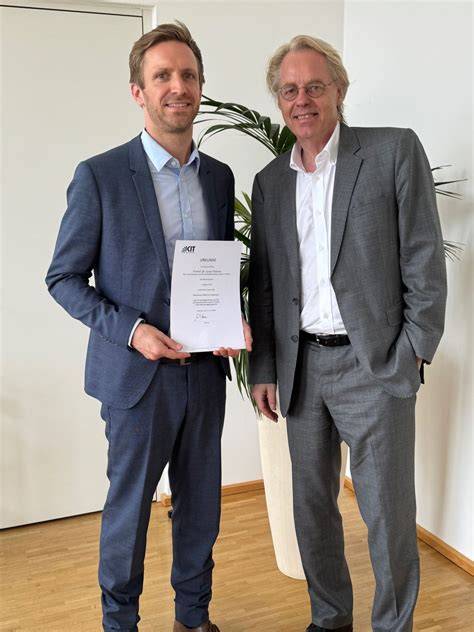
Our project manager, Julian Thimme, has been a tenure-track professor (W1) at KIT since 2019 and received a positive evaluation in 2025. Since August 2025, he has been a W3 professor of “Finance” and heads the Financial Markets Department at KIT. His research focuses on the factors that determine the prices of securities and the economic mechanisms underlying their pricing. His work lies at the intersection of asset pricing theory, empirical research, and econometrics. He pays particular attention to macroeconomic risks, volatility risks, and financial market frictions as key drivers of security prices.
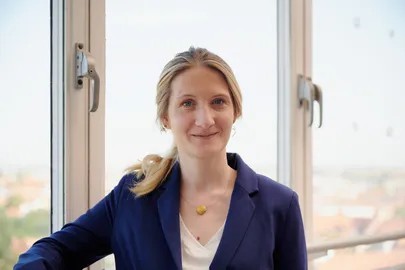
In May 2024, our project manager Jantje Sönksen obtained her Habilitation with a venia legendi in "Econometrics and Empirical Finance". Her habilitation lecture was titled “The Benefits of Complexity in Empirical Finance and Their Impact on Model Selection.” After successfully completing her habilitation, she accepted a position at Leibniz University Hannover and assumed the professorship at the Institute for Econometrics and Data Science in the Department of Business and Economics. Her research focuses on the intersection of statistical methods and financial applications, particularly on the selection of appropriate models in complex financial markets. She combines simulation-based econometrics, machine learning in asset pricing, and empirical finance with a focus on intermediary-based approaches to modeling price formation processes.